
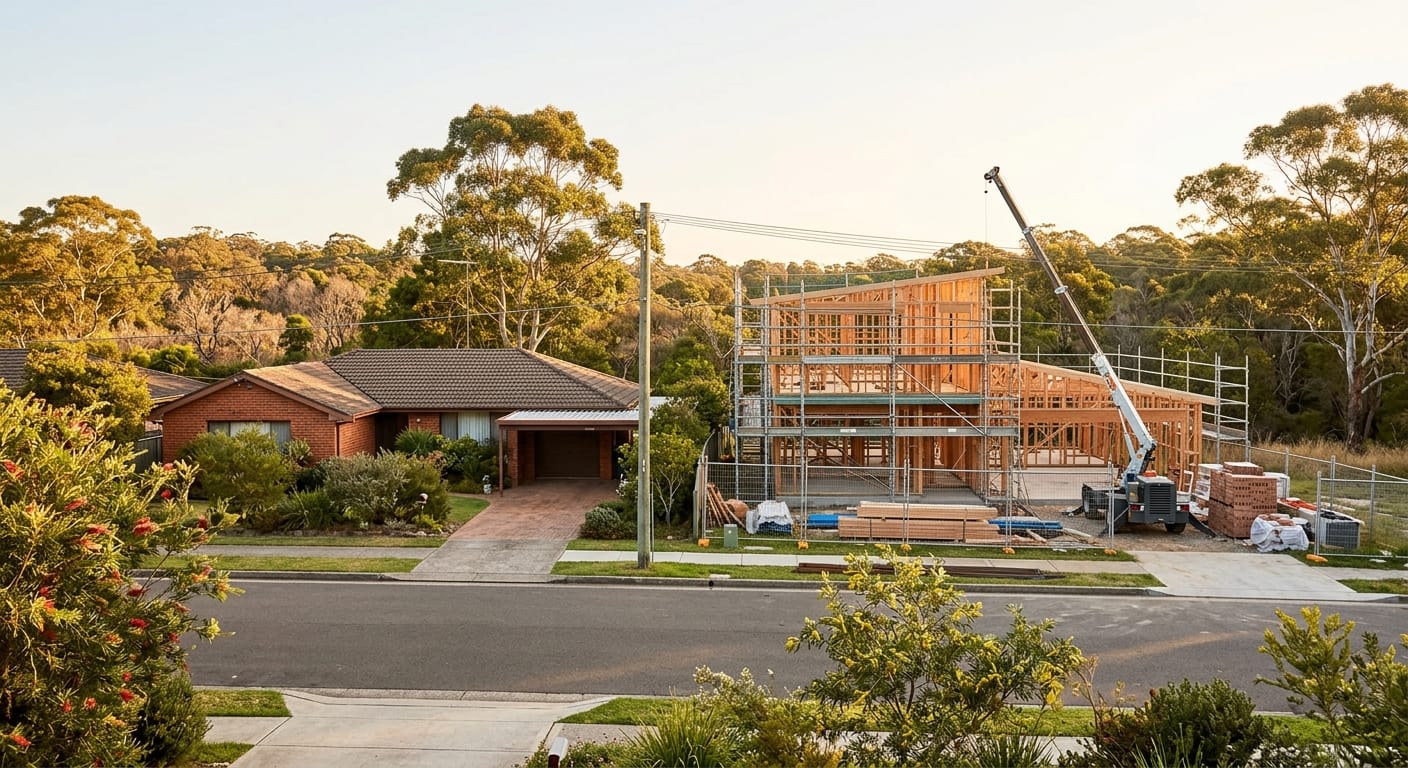

Pulling down an older house and building new, or putting a duplex on a big block, is one of the most popular ways Shire families get the home they want without leaving the street they love. However, knockdown rebuild finance works quite differently from a standard home loan. The lender funds the build in stages, values a house that doesn’t exist yet, and expects you to cover some costs yourself. This guide explains how it works, what lenders look for, and the questions to ask before you sign a building contract.
How Knockdown Rebuild Finance Works
Most knockdown rebuild finance takes the form of a construction loan. If you still owe money on the existing house, the new loan usually pays out your current mortgage and then adds the building costs on top, so you end up with one loan secured by your land and the new home.
Progress Payments Instead of One Lump Sum
Rather than handing over the full amount at the start, the lender pays your builder in stages as each part of the job is finished, such as the slab, frame, lock-up, fit-out and completion. Before each payment, the lender usually checks that the stage is actually done. Because you pay interest only on the money drawn so far, repayments start small and grow as the build progresses. Our construction loans page walks through each stage in more detail.
Valuations “as If Complete”
Once the old house comes down, the property is essentially land. For that reason, lenders value the property “as if complete”: a valuer looks at your land, the plans, the specifications and the building contract, then estimates what the finished home will be worth. Lenders base the loan amount on that figure, so a well-documented contract and realistic plans matter. If the valuation comes in lower than expected, you may need to contribute more of your own money before the build starts.
Costs to Budget for Before You Knock Down
The building contract is only part of the picture. One Sydney builder’s 2026 cost guide (Buildana) puts typical knockdown-rebuild costs at roughly $480,000 to $900,000 or more, and several costs often sit outside the contract price. Your knockdown rebuild finance may not cover these, so plan for them early:
- Demolition and site costs: demolition, asbestos removal, disconnecting services, tree removal, excavation on sloping blocks and retaining walls. Some builders include these, while others quote them separately.
- Living costs during the build: rent or temporary accommodation for the months the site is a building zone, on top of the interest on the funds drawn so far.
- Extras outside the contract: driveways, fencing, landscaping, pools and window coverings.
- A contingency buffer: variations and price rises are common once work starts, and lenders won’t always increase the loan mid-build.
Our article on renovation and construction costs covers why prices keep moving, and the borrowing power calculator gives you a first estimate of what you could borrow.
Duplex and Dual Occupancy Finance
A duplex, or dual occupancy, puts two homes on one block. Some owners build to live in one side and rent the other, some keep both as long-term investments, and others sell one side to reduce their debt. Each plan changes how lenders approach the finance.
Strata or Torrens Title
After construction, a duplex can often be subdivided so each home has its own title. With Torrens title, each dwelling sits on its own lot of land. With strata title, each owner holds a lot and shares common property, which an owners corporation manages. Whether subdivision is possible, and which type suits, depends on council rules and your approvals, so check this with your designer and council before you commit.
Selling One Side Versus Keeping Both
If you plan to keep both homes, lenders usually assess the loan like a construction loan with a larger end value, and some will count the expected rent from the second dwelling. If you plan to sell one side, however, some lenders treat the project more like a small development and look closely at your exit plan and how you’ll repay if a sale takes longer. Building to sell can also have GST and income tax consequences, so speak to your accountant before you choose a structure. Our investment loans page explains how lenders assess rental income.
Granny Flats
A granny flat is a smaller second dwelling behind the main home. You can fund one with a construction loan or, for some borrowers, by releasing equity through a refinance. Some lenders count future granny flat rent towards your borrowing power, while others won’t, which is exactly where comparing lenders helps.
Planning Approvals: DA or CDC
In NSW, new homes generally need either a development application (DA) lodged with council, or a complying development certificate (CDC) for straightforward projects that meet set standards. A CDC can be faster, but not every block or design qualifies. The NSW Planning Portal explains the approval pathways in plain language. Either way, lenders want approved plans before the first progress payment, so build approval time into your plans.
Bushfire-Prone Land and BAL Ratings
Much of the upper Shire borders national park and bushland. If bushfire-prone land mapping covers your block, the new home needs a bushfire attack level (BAL) assessment, and a higher BAL means extra construction requirements such as ember protection and tougher materials. The NSW Rural Fire Service explains building on bushfire-prone land. Get the BAL assessed before you finalise the building contract, so the loan covers the true cost.
Home Building Compensation Insurance
In NSW, residential building work worth more than $20,000 (including GST) needs home building compensation cover, and you should check the builder has it before you pay any money or work starts, according to the NSW Government. It protects homeowners as a last resort if the builder can’t finish the job or fix defects. Lenders generally ask for the certificate of insurance before they release funds, so request it from your builder early.
Where Knockdown-Rebuilds Are Common in the Shire
We arrange knockdown rebuild finance and duplex loans right across the Shire, especially where blocks are larger and homes are older. Menai, Bangor and Illawong have plenty of 1980s homes on generous blocks. Engadine and Heathcote combine larger blocks with bushfire planning considerations. Around Sutherland, Kareela and Jannali, owners often rebuild rather than move. See all the areas we cover on our Sutherland Shire mortgage broker page.
Questions to Ask Your Builder
- Is the contract fixed-price, and what exactly does it exclude?
- Does the price include demolition, site works and service connections?
- What is the progress payment schedule, and does it match what lenders usually fund?
- Can you provide your licence details and the home building compensation certificate?
- How do you price and approve variations?
- What is the expected build time, and what happens if it runs late?
Knockdown Rebuild Finance FAQs
Loans and Costs
Often, yes. The construction loan usually pays out your existing mortgage and then funds the build in stages. Lenders assess the land value and the “as if complete” value of the new home, along with your income and expenses.
Usually, yes. During construction many loans are interest-only on the amount drawn so far, so repayments rise with each progress payment. Remember to budget for rent at the same time.
It depends on the lender and your contract. If the builder’s fixed-price contract includes demolition, the loan often funds it as part of the build. If the builder quotes it separately, you may need to pay for it yourself.
Duplexes and Approvals
Possibly. Some lenders treat this like a small development and look closely at your exit plan. Tax and GST can also apply, so speak to your accountant before you commit.
You can often get pre-approval first, but lenders generally need approved plans (a DA or a CDC) and a signed building contract before formal approval and the first progress payment.
It doesn’t usually stop you borrowing, but a higher BAL can add to building costs. Get the assessment early so your loan covers the real price of the build.
Talk to Us Before You Sign a Building Contract
The best time to sort out knockdown rebuild finance is before you commit to a builder. We compare construction lenders, check how each one values your project, and help you plan for the costs outside the contract. We’re based in Bangor, NSW, and we also help clients across Australia by phone and video. If you’re selling another property to fund the build, our bridging loans page explains your timing options.
Prefer to talk now? Call Shannon on 0402 283 480.
The information on this page is general in nature and does not take into account your objectives, financial situation or needs. Lending criteria, fees and charges apply. Speak to your accountant or tax adviser about tax. Consider whether it is appropriate for you and speak to us for advice specific to your situation.
Need Some Help?
Not sure where to start? That’s exactly what we’re here for. Drop us a message and we will get back to you within one business day with clear, honest advice tailored to your situation.


