
We do all the legwork to match your needs to the right construction loan, saving you time, stress and hassle.
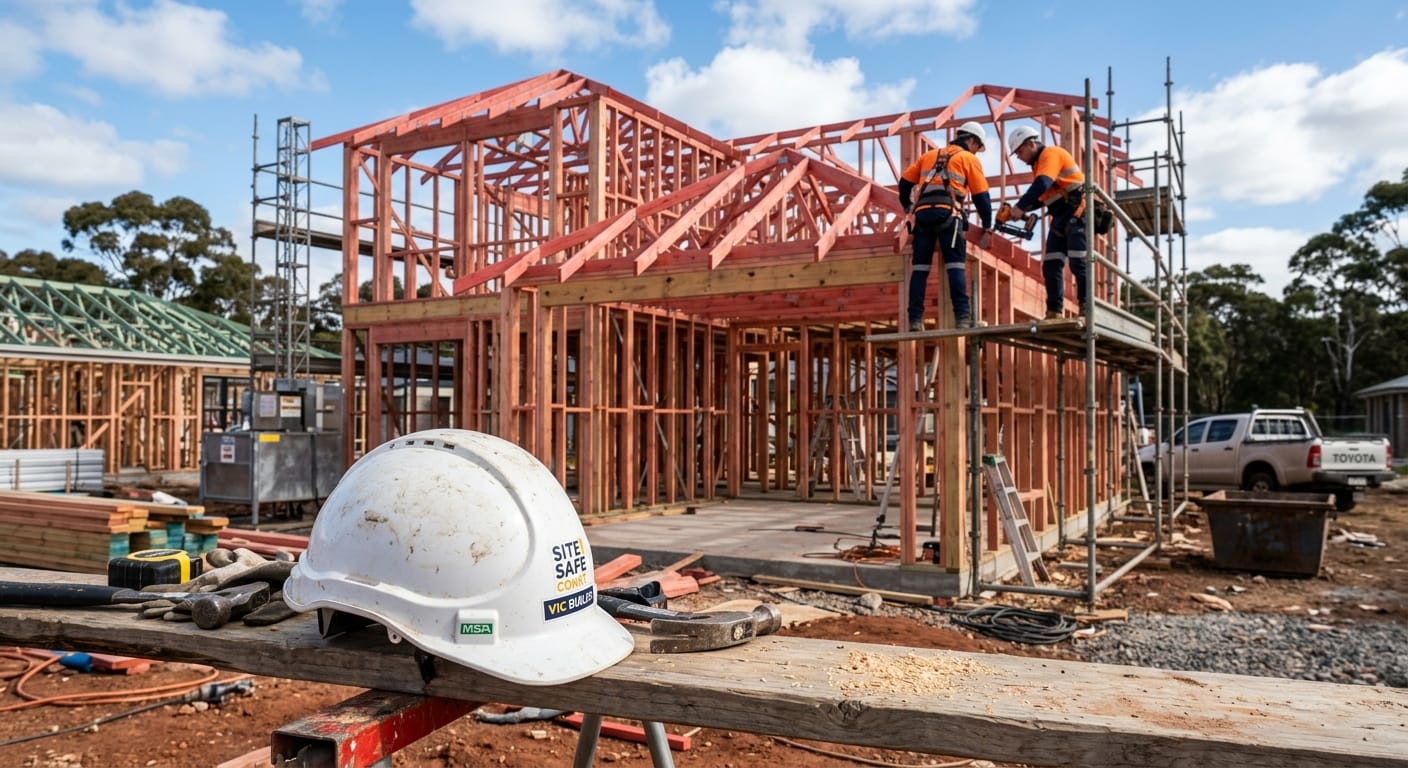
Renovating or Building Your Dream Home?
If you’re thinking of building your own home from scratch, it’s a smart move to research your finance options before you enter into a building contract.
We provide loan solutions for buying land, building new homes, purchasing off-the-plan and house & land packages.
Securing a loan to build a home is a little different than buying an established house because often the land and building purchase will need to settle separately.
The Application Stage
To accommodate this, your lender will likely manage your initial loan as two separate but simultaneous applications: one for the land purchase and the second for the completed house and land cost.
The second application will eliminate the first loan and leave you with just one loan.
The Construction Stage
Most lenders will also require you to build on your land within two years of settlement. This does not mean you need to finish the home within the two-year time frame, just that you need to start building within two years of settling on your land.
The construction of your home will generally be conducted in stages, with payments required at the end of each stage.
The Repayment Stage
The bank or lender only charges you on the amount of money you have drawn down, so your minimum repayment will vary depending on which stage your home has reached.
While most construction loans have a variable interest rate, there are some available that operate as fixed rate loans. If you do use a fixed rate construction loan, you may end up with one rate on your land loan and a second rate on your construction loan.
How Progress Payments Work
Rather than paying the full loan amount upfront, the lender pays your builder in stages as work is completed. Before each payment, the lender usually arranges a progress inspection to confirm the stage is finished. Typical stages under a NSW building contract are:
- Deposit: paid when you sign the building contract
- Base or slab: foundations and slab completed
- Frame: the house frame is up
- Lock-up: external walls, windows and doors installed
- Fixing: internal fit-out such as cabinets, doors and plastering
- Practical completion: the home is finished and ready to hand over
Your own contribution (your deposit or savings) is usually used first, before the lender starts releasing loan funds. You typically pay interest only on the amount drawn so far, so repayments start small and grow as the build progresses.
Costs to Plan For
- Interest during the build on the funds drawn so far, which increases at each stage
- Somewhere to live, such as rent, or repayments on your current home if you’re doing a knockdown-rebuild
- Progress inspection and valuation fees charged by some lenders
- Items outside your building contract, such as driveways, landscaping, fencing and window coverings. Lenders may not fund these, so budget for them separately
- A contingency buffer for variations and price rises. Building costs often change once work starts, and lenders won’t always increase the loan mid-build
What You’ll Need to Apply
- A signed, fixed-price building contract from a licensed builder
- Council development approval (DA) or a complying development certificate (CDC)
- Plans and specifications, plus quotes for any extras outside the contract
- Evidence of the builder’s home building compensation (insurance) cover, which is generally required in NSW for residential building work over $20,000
- Your usual income and identification documents
The NSW Government’s guide to preparing to build or renovate is a helpful checklist before you sign anything.
Knockdown-Rebuilds, Granny Flats and Renovations in the Sutherland Shire
Larger blocks across the Shire make it a popular place to build. We regularly help locals with knockdown-rebuilds on older homes, new builds on subdivided blocks, second storeys and granny flats, especially in areas like Menai, Engadine, Heathcote, Sutherland and Kareela.
- Knockdown-rebuilds: the lender values the property “as if complete”, and you’ll need to plan where you’ll live and how you’ll cover costs during the build.
- Granny flats: some lenders will count the future rent towards your borrowing power, while others won’t. It pays to compare.
- Renovations: smaller projects can often be funded by releasing equity through a refinance. Larger structural work usually suits a construction loan.
Building on Bushfire-Prone Land
Many Shire properties back onto national park or bushland. If your block is on bushfire-prone land, your build will need a bushfire attack level (BAL) assessment, and higher ratings mean extra construction requirements and cost. The NSW Rural Fire Service explains what’s involved. Get your BAL assessment early so your loan covers the true cost of the build.
Owner-Builders
Fewer lenders offer construction loans to owner-builders, and those that do usually ask for a bigger deposit and more documentation. If you’re planning to manage your own build, talk to us early so we can tell you what’s realistic.
Building in the Shire? See how we help Sutherland Shire homeowners, or book a free chat before you sign a building contract.
Construction Loan FAQs
The lender pays your builder in stages, such as slab, frame, lock-up, fixing and completion, usually after an inspection confirms each stage is done. Your own contribution is normally used first, and you generally pay interest only on the amount drawn so far.
Usually, yes, but many construction loans are interest-only during the build, and you only pay interest on the funds drawn so far. Repayments grow as more stages are paid, then typically switch to principal and interest once the build is complete.
Lenders generally won’t increase the loan once construction has started without a new assessment, so you may need to cover cost overruns yourself. That’s why a fixed-price contract and a contingency buffer are so important.
Yes. A granny flat can be funded with a construction loan or, for some borrowers, by releasing equity through a refinance. Some lenders will also count the expected rent towards your borrowing power.
It’s possible, but fewer lenders offer owner-builder loans and those that do usually want a larger deposit. Speak to us before you start so we can check your options.
Know Your Numbers Before You Build
Before locking in a builder or signing a contract, it’s worth getting a clear picture of what you can borrow. Use our Borrowing Power Calculator below to get an instant estimate based on your income, expenses and existing financial commitments. Then contact us so we can confirm an exact amount for you and arrange a pre-approval.
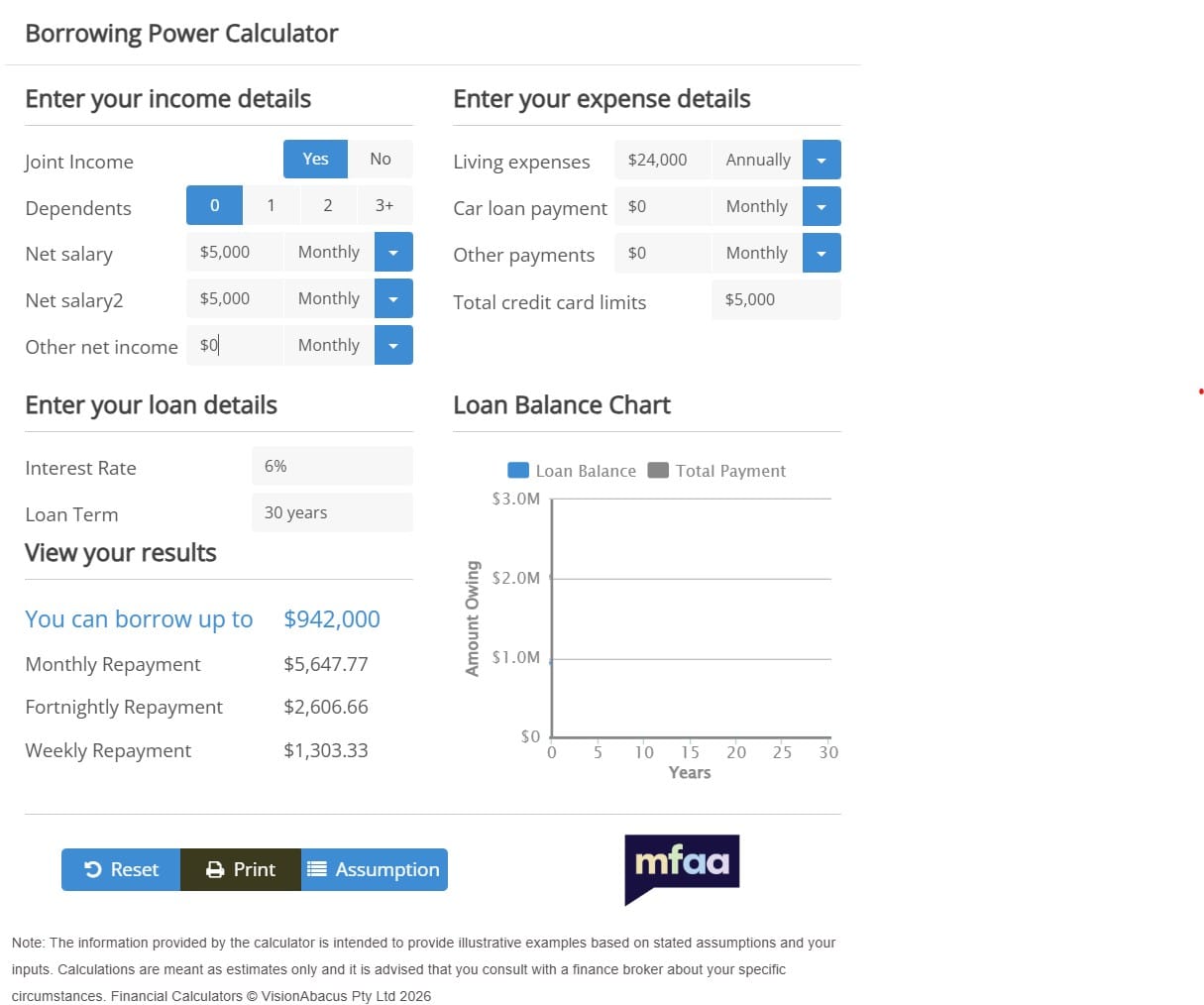
Borrowing Power Calculator
Estimate how much you may be able to borrow based on your income, expenses and existing commitments.
The information on this page is general in nature and does not take into account your objectives, financial situation or needs. Lending criteria, fees and charges apply. Consider whether it is appropriate for you and speak to us for advice specific to your situation.
Need Some Help?
Not sure where to start? That’s exactly what we’re here for. Drop us a message and we will get back to you within one business day with clear, honest advice tailored to your situation.