
Use the savings planner calculator to find out how much you could save.
Understand How Much You Could Save
Saving for a home deposit is one of the biggest financial goals most Australians will ever take on. This savings planner calculator makes it simple. Enter your starting balance, regular contributions, and deposit target, and it will show how long it takes to get there and how much interest you’ll earn.
Whether you’re a first home buyer working towards your first deposit or building savings for an investment property, knowing your number is the first step. Once you’re clear on your target, we can help you find the right lender, understand genuine savings rules, and structure your loan for the best outcome.
How to Use This Savings Planner Calculator
- Enter your current savings balance: include any money already set aside for your deposit.
- Add your regular monthly contribution: how much you plan to save each month going forward.
- Set your savings goal: typically your target deposit amount plus upfront costs (see below).
- Enter your expected interest rate: check your current savings account rate or use an estimate.
- Review your results: the calculator will show your projected timeline and total interest earned.
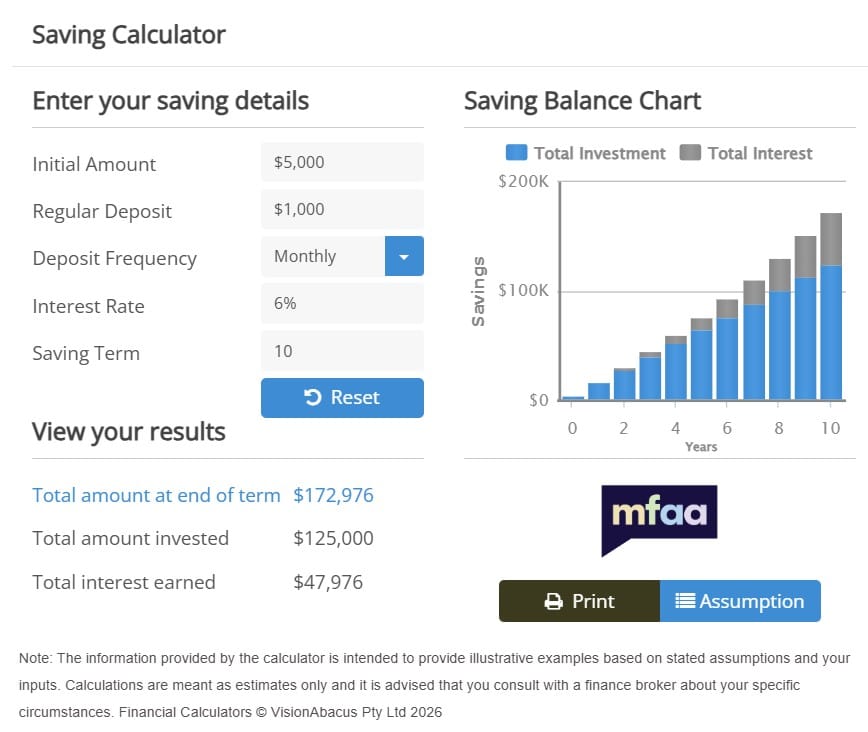
Savings Calculator
This tool allows you to see how your savings will grow over time given regular deposits
How Much Do I Need to Save for a Home Deposit in Australia?
Most Australian lenders require a minimum deposit of 5% of the property’s purchase price, but that’s rarely the full picture. On top of your deposit, you’ll need funds to cover upfront costs including stamp duty, conveyancing fees, building and pest inspections, and loan establishment fees. Depending on the state and purchase price, these costs typically add $15,000 to $30,000 or more to your savings target.
If your deposit is less than 20% of the purchase price, most lenders will charge Lenders Mortgage Insurance (LMI), a one-off premium that protects the lender (not you) if you default on the loan. LMI can cost anywhere from a few thousand dollars to over $20,000, so hitting the 20% deposit mark can result in significant savings. Eligible first home buyers can also avoid LMI with a 5% deposit through the government’s First Home Guarantee, which has had no income caps since 1 October 2025.
Many lenders also require that your deposit consists of genuine savings: funds that have been held in your account for at least three months, demonstrating a pattern of regular saving. Gifts from family, lump sum windfalls, or tax refunds may or may not qualify depending on the lender. Talk to us to understand exactly what will count towards your deposit.
Tips to Reach Your Savings Goal Faster
1. Automate your savings on pay day
Set up an automatic transfer to your savings account the same day your salary lands. Paying yourself first removes the temptation to spend before saving and helps you reach your savings planner goals.
2. Use a high-interest savings account
Make sure your deposit savings are in an account earning a competitive interest rate. Even a 0.5% difference in rate can add up to thousands of dollars over a two or three year saving period.
3. Explore the First Home Super Saver Scheme (FHSS)
The FHSS scheme lets eligible first home buyers make voluntary contributions to their super fund. You can later withdraw up to $50,000 of those contributions (plus associated earnings) towards your deposit. Because super is taxed at a lower rate, this can be a highly tax-effective way to boost your savings.
4. Check your eligibility for first home buyer grants and concessions
Depending on the state you’re buying in and the property type, you may be eligible for the First Home Owner Grant (FHOG) or stamp duty concessions, which can meaningfully reduce how much you need to save.
5. Understand how gifted deposits work
If a family member is helping with your deposit, lenders treat gifted funds differently to genuine savings. Some lenders require a signed gift letter and evidence that no repayment is required. We can guide you through which lenders accept gifted deposits and what’s needed.
6. Get pre-approved so you know your exact target
Saving towards a vague number can feel endless. Getting pre-approved gives you an indicative borrowing limit, usually valid for about three months, and a clear deposit figure to aim for. That focus makes the saving process much easier.
Ready to Turn Your Savings Into a Home Loan?
Once you’ve hit your savings goal, Ingram Financial can help you compare lenders, understand your borrowing power, and secure the right loan for your situation, at no cost to you. Book a free consultation
You Might Also Find These Helpful
Compare Home Loan Rates: see current rates from multiple lenders
First Home Buyer Loans: explore your options
Get Home Loan Pre-Approval: know your borrowing power
Home Loan Calculators: repayments, borrowing power and more
Frequently Asked Questions
Most lenders require a minimum deposit of 5% of the purchase price, though you’ll also need funds for upfront costs such as stamp duty and conveyancing. A deposit of 20% or more allows you to avoid Lenders Mortgage Insurance (LMI), which can save a significant amount. A mortgage broker can help you understand the minimum deposit requirements across different lenders for your specific situation.
Genuine savings generally refers to funds that have been accumulated over time, typically held in a savings account for at least three months. Regular salary deposits and term deposits usually qualify. Lump sums like tax refunds, bonuses, or gifts don’t always qualify, though some lenders are more flexible than others. We can match you with the right lender based on how your savings are structured.
Yes. The FHSS scheme allows eligible first home buyers to withdraw up to $50,000 in voluntary super contributions (plus earnings) to put towards a home deposit. Super contributions are taxed at 15%, usually lower than your marginal tax rate. This can make it a highly tax-effective strategy. You’ll need to apply to the ATO for an FHSS determination before signing a purchase contract.
Often, yes. Many lenders offer lower interest rates to borrowers with a higher deposit (lower loan-to-value ratio or LVR) because it represents less risk to them. Borrowers with a 20% or greater deposit typically access the most competitive rates and avoid LMI. Even the difference between an 80% and 90% LVR loan can mean a meaningfully different rate over the life of the loan.
It varies widely depending on your income, expenses, and target property price. Use the savings planner above to calculate your specific timeline. On average, first home buyers take between two and five years to save a deposit. Grants, the FHSS scheme, and family assistance can all shorten that timeline.
Once you have a savings target in mind, it’s also worth using our home loan calculators to estimate your borrowing capacity and repayments, and our rate comparison tool to see current rates from multiple lenders.
The information on this page is general in nature and does not take into account your objectives, financial situation or needs. Calculator results are estimates only. Lending criteria, fees and charges apply. Consider whether it is appropriate for you and speak to us for advice specific to your situation.
Need Some Help?
Not sure where to start? That’s exactly what we’re here for. Drop us a message and we will get back to you within one business day with clear, honest advice tailored to your situation.